
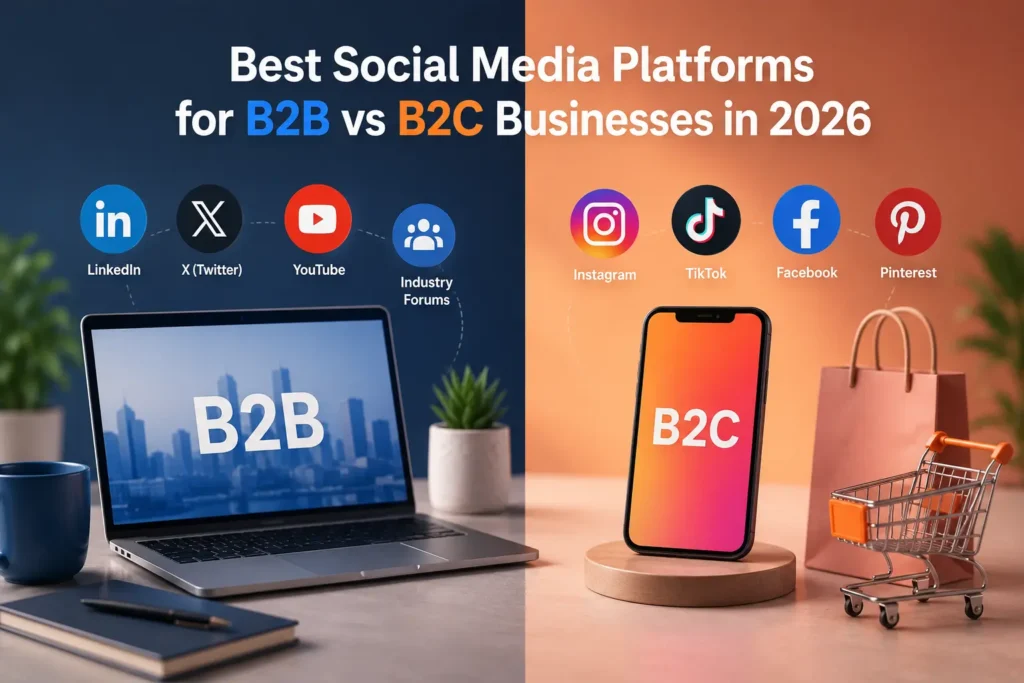
Best Social Media Platforms for B2B vs B2C Businesses in 2026
Social media isn’t a single channel — it’s an ecosystem of very different platforms, each with its own audience, format, and rules of engagement. The biggest mistake most businesses make is trying to be everywhere. The smartest approach is to be excellent on the right two or three platforms for your specific audience.
In this guide, we’ll break down which platforms work best for B2B vs B2C — and how to choose where to focus.
Why Platform Choice Matters So Much
Different platforms attract different audiences in very different mindsets. LinkedIn users behave nothing like TikTok users. Instagram audiences engage differently from YouTube viewers. Choosing the wrong platform isn’t just inefficient — it can quietly waste years of effort.
Best Platforms for B2B Businesses
For B2B brands — agencies, SaaS companies, consultancies, financial services — three platforms consistently dominate.
LinkedIn is the undisputed leader. With over a billion professionals on the platform, LinkedIn has become the world’s most powerful B2B network for thought leadership, lead generation, and recruitment.
YouTube is increasingly a B2B engine. Long-form video — case studies, tutorials, expert interviews — builds extraordinary trust at scale.
X (formerly Twitter) still drives meaningful B2B conversation in tech, finance, and creator communities.
This is exactly why we structure B2B social media management campaigns around LinkedIn and YouTube as primary channels.
Best Platforms for B2C Businesses
For consumer brands — fashion, beauty, hospitality, food, e-commerce, lifestyle — the strongest platforms are visual and discovery-led.
Instagram remains the centrepiece for most consumer brands, with a strong combination of static, video, and story-based content formats.
TikTok continues to dominate short-form video and product discovery. Its algorithm consistently surfaces small brands to large new audiences faster than any other platform.
YouTube Shorts is rapidly closing the gap with TikTok and benefits from YouTube’s massive long-term watch ecosystem.
Pinterest is exceptional for visual product discovery — particularly fashion, home, beauty, and food.
External research from Statista consistently confirms which platforms dominate which audiences globally.
Hybrid Brands
Some brands serve both B2B and B2C audiences — for example, e-commerce platforms, professional services firms, and creator-led brands. These usually run a multi-platform strategy with different content tracks for different audiences.
How to Decide Where to Focus
Start by asking three questions: Where does my ideal customer already spend time? What format am I genuinely good at producing (video, writing, design)? Where can I commit to consistency for at least 12 months? Aligning these three answers usually points to two strong platforms.
Frequently Asked Questions
Should I be on every major platform?
No. Two platforms done excellently outperform six done poorly.
Is Facebook still relevant?
For local services and community-led brands, yes. For most B2B and digital-native B2C, less so.
Should I focus on followers or engagement?
Engagement and conversions — followers without engagement mean very little.
Final Thoughts
The right platforms depend on your audience, format strengths, and goals. If you’d like a tailored recommendation, book a free consultation with our team.