
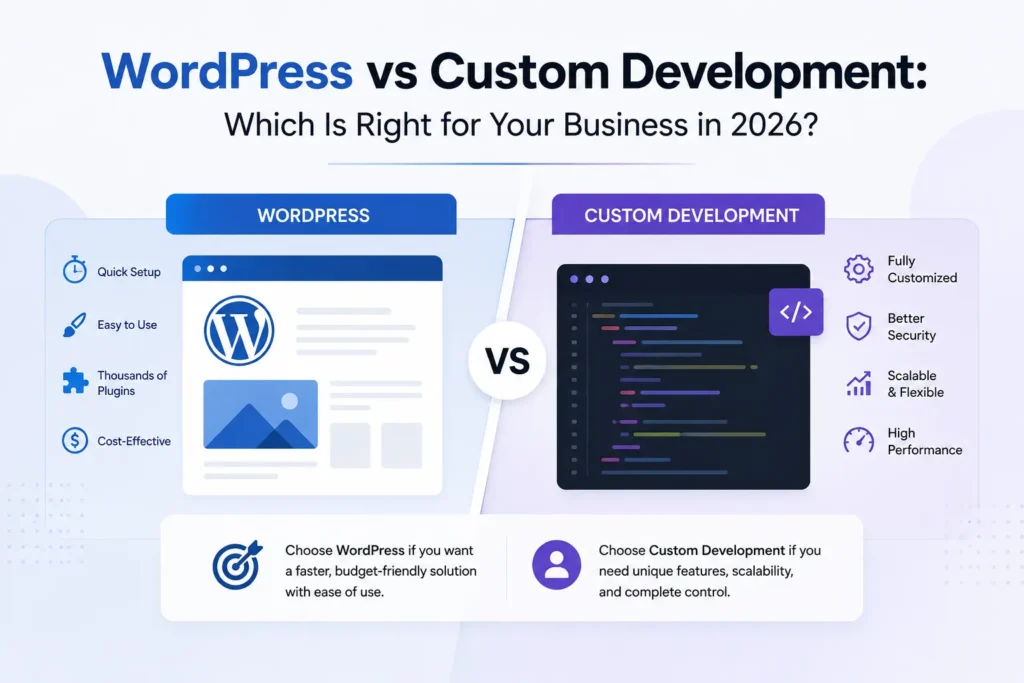
WordPress vs Custom Development: Which Is Right for Your Business in 2026?
When it comes to building a serious business website, every owner eventually faces the same crossroads: should we build on WordPress or commission custom development? Both paths can lead to outstanding outcomes — and to expensive disasters. The right choice depends entirely on your goals, complexity, budget, and long-term vision.
In this guide, we’ll walk through both approaches honestly and help you decide which fits your business best.
What Is WordPress?
WordPress is the world’s most widely used content management system, powering a significant share of the web. It runs everything from small blogs to enterprise-scale platforms thanks to its massive plugin and theme ecosystem.
What Is Custom Development?
Custom development means building your website from scratch using languages and frameworks like JavaScript, React, Node.js, Python, or PHP. The result is a fully bespoke platform tailored to your exact requirements — without the constraints of any CMS.
Speed of Launch
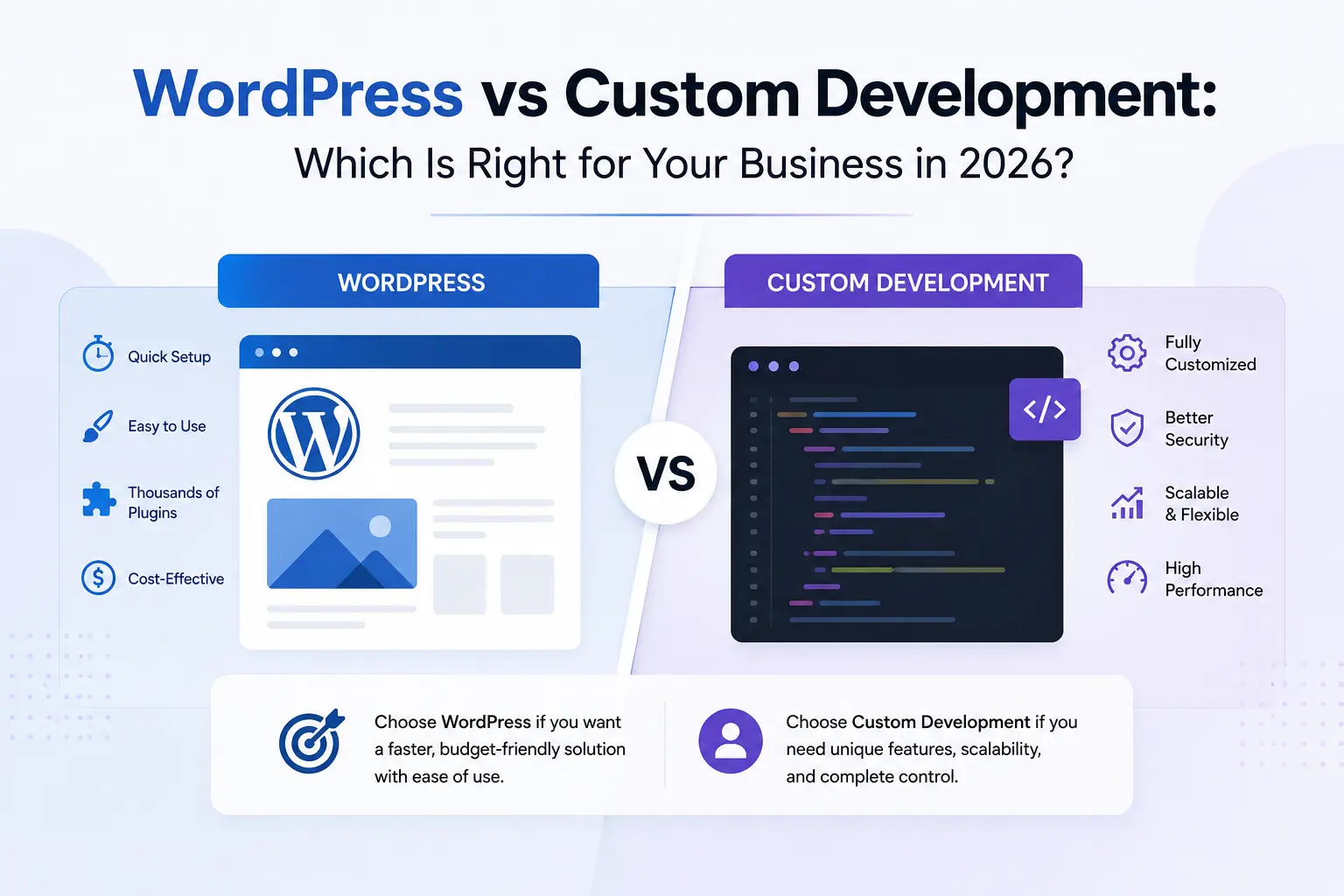
WordPress wins decisively here. A strong WordPress build can be ready in weeks, while custom platforms typically take months. For most early-stage and SME businesses, that speed translates directly into earlier revenue.
Flexibility
Custom development wins on flexibility. If your business genuinely requires unique features, integrations, or workflows not supported by existing CMSs, custom is the right call. WordPress, however, is far more flexible than many people assume — especially when paired with skilled website design and development.
Cost
WordPress is dramatically more cost-effective for most use cases. Custom builds require significantly more developer time, ongoing maintenance, and infrastructure spend. For complex platforms, however, custom often delivers better long-term ROI despite the higher initial investment.
SEO
Both can rank exceptionally well. WordPress benefits from mature SEO tooling like Yoast and Rank Math. Custom platforms can be SEO-optimised at every level — but only if developers prioritise it from day one.
Maintenance
WordPress requires regular updates to core, plugins, and themes — but most of this can be automated or handled through managed hosting. Custom platforms need ongoing developer involvement, which adds long-term cost.
Security
Both can be highly secure when properly managed. WordPress’s massive scale makes it a frequent target, which means security best practices are critical. Custom platforms are less broadly targeted but require strong in-house or partner expertise.
Scalability
Both scale. Major brands run on WordPress; major brands run on custom platforms. The deciding factor is usually team capability and complexity of business logic, not platform limits.
Which Should You Choose?
Choose WordPress if you want fast launch, broad flexibility, lower costs, and a proven ecosystem. Choose custom development if your business has highly unique requirements, complex integrations, or specific performance and security demands that exceed what WordPress can offer.
For most businesses across our served industries, WordPress remains the most cost-effective and scalable choice. But for the right project, custom is unmatched.
Frequently Asked Questions
Is WordPress secure enough for serious business?
Yes — when properly managed.
Can I migrate from WordPress to custom later?
Yes, and many growing businesses do.
Which delivers better SEO?
Both can — execution matters more than the platform.
Final Thoughts
There’s no universally “best” answer — only the right answer for your business. If you’d like an honest, tailored recommendation, request a quote and we’ll guide you.