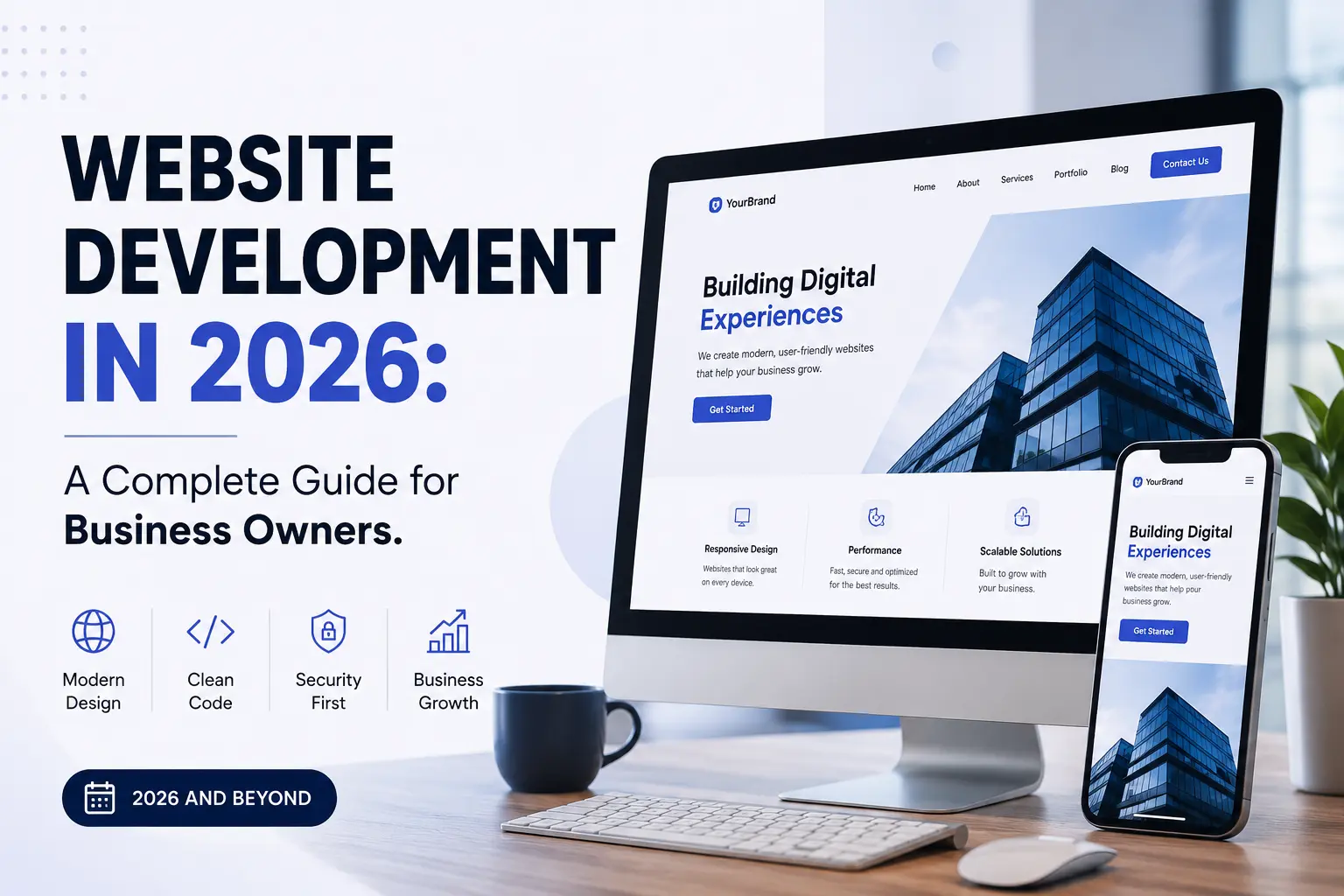

Website Development in 2026: A Complete Guide for Business Owners
Your website is the single most important digital asset your business will ever own. It’s your storefront, your salesperson, your credibility check, and increasingly, the first interaction every potential customer has with your brand. And yet, most business owners feel completely lost when it comes to actually building one.
In this guide, we’ll demystify modern website development — covering platforms, costs, timelines, SEO, hosting, and what genuinely makes a website succeed in 2026.
What Is Website Development?
Website development is the process of designing, building, and launching a website that meets specific business goals. It typically involves strategy, UX/UI design, front-end and back-end development, content, SEO, and ongoing maintenance.
Modern websites are far more than digital brochures — they’re growth engines that integrate with marketing, sales, and operations.
Choose the Right Platform
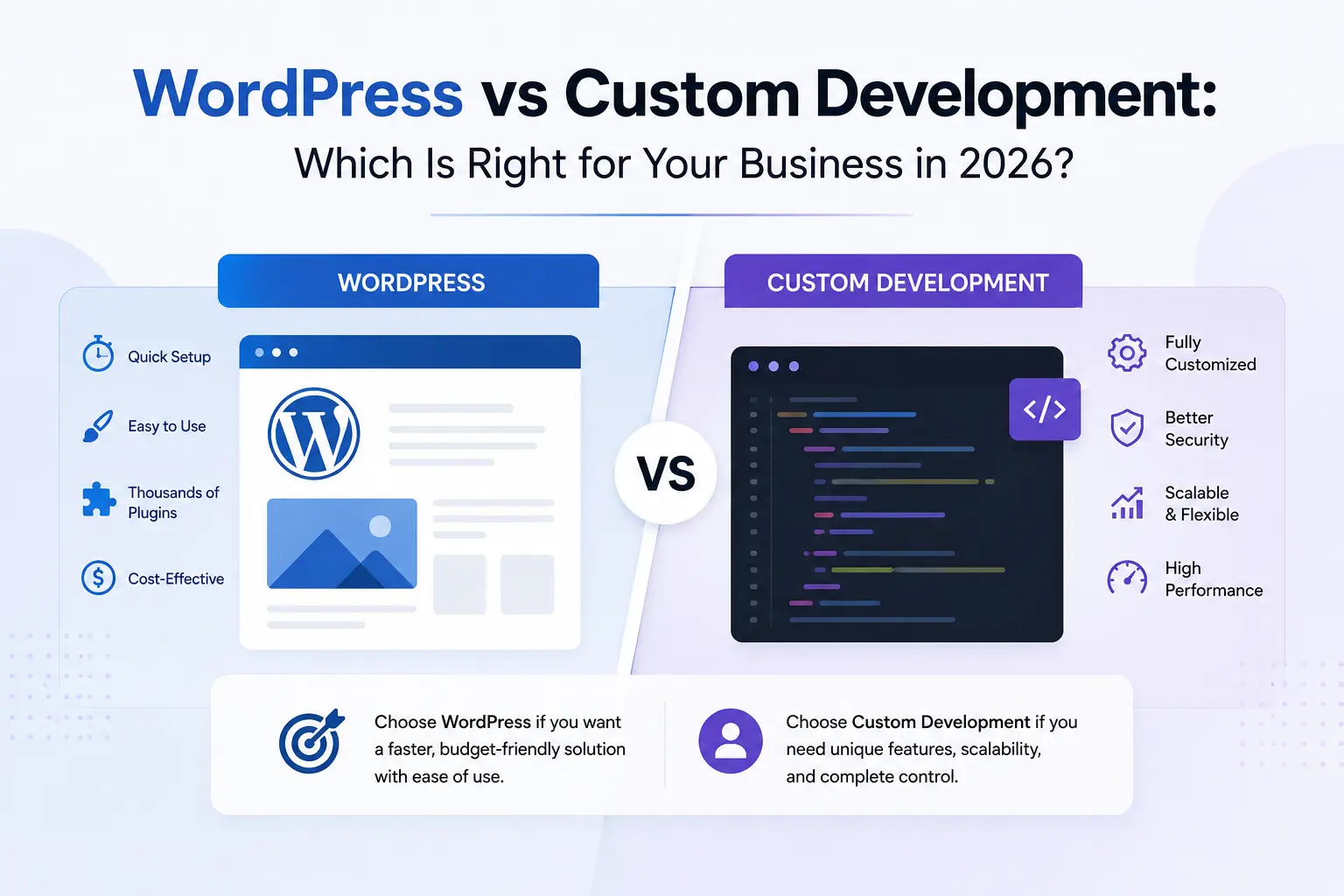
The platform you choose shapes everything. WordPress powers a significant portion of the web for a reason — it’s flexible, SEO-friendly, and supported by a massive ecosystem. Webflow is increasingly popular for design-led brands. Shopify leads in e-commerce. Custom-coded solutions remain the right choice for highly complex platforms.
We help clients make this decision as part of our website design and development service.
Plan the Architecture First
Most failed websites fail at the planning stage, not the build stage. Before any visual design begins, plan your sitemap, page hierarchy, navigation structure, and SEO foundation. This is part of our process — strategy first, design second, development third.
Design for Real Users
Modern users expect fast, intuitive, mobile-first experiences. Strong UI/UX design isn’t a luxury — it’s a baseline expectation. Following Nielsen Norman Group’s UX guidelines ensures your site works for real people, not just designers.
Build for Performance
A slow website kills conversion and SEO. Google’s Core Web Vitals directly influence both rankings and user satisfaction. Optimised images, modern hosting, clean code, and smart caching are non-negotiable.
Bake SEO Into the Foundation
Adding SEO after launch is far harder and more expensive than building it in from day one. Clean URLs, semantic HTML, structured data, fast load times, and proper internal linking should all be standard. Our SEO optimisation service integrates directly into every build.
Plan for Hosting, Security, and Scaling
Hosting determines speed, uptime, and reliability. Strong hosting partners like Cloudflare, Kinsta, and WP Engine make a measurable difference. Combine that with HTTPS, regular backups, and security plugins.
Cost and Timeline Expectations
Costs vary significantly. Small business websites typically range from a few thousand pounds to mid five figures. Custom platforms or e-commerce projects scale higher. Timelines normally range from 4 weeks for simple sites to several months for complex builds.
Don’t Forget Post-Launch
Launch is the start, not the end. Ongoing maintenance, performance monitoring, content updates, and SEO ensure the website continues to deliver results long after going live.
Frequently Asked Questions
How long does website development take?
Typically 4–12 weeks depending on complexity.
Should I build my own site?
For very simple needs, yes. For business-critical websites, professional development consistently delivers better ROI.
Is WordPress still the best CMS?
For most businesses, yes — flexibility, SEO control, and ecosystem strength remain unmatched.
Final Thoughts
A great website is one of the highest-ROI investments a modern business can make. If you’d like expert guidance on yours, book a free consultation and let’s build something that performs.