
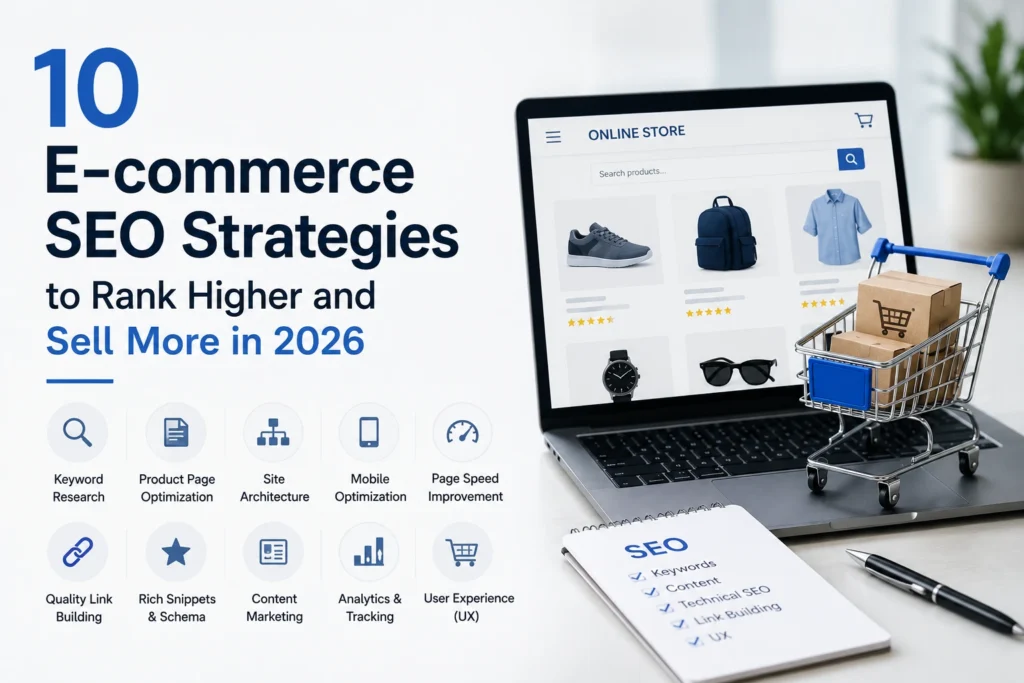
10 E-commerce SEO Strategies to Rank Higher and Sell More in 2026
Most e-commerce founders are addicted to ads. They spend more, scale more, and panic when ROAS dips. Meanwhile, the smartest brands are quietly building SEO engines that bring in qualified traffic 24/7 — without ongoing ad spend. The secret isn’t more content; it’s the right strategy applied consistently.
Here are ten e-commerce SEO strategies that genuinely move the needle in 2026.
1. Start With Buyer-Intent Keyword Research
Generic keywords are vanity. Buyer-intent keywords (“buy”, “best”, “review”, “alternatives”, “vs”) drive sales. Tools like Ahrefs, SEMrush, and Google Search Console reveal exactly which terms your real buyers use.
2. Optimise Product Pages Beyond the Basics
Most product pages are SEO graveyards. Optimise titles, meta descriptions, image alt text, structured data, and unique product copy. Every product page should answer the questions a buyer would ask before purchasing.
3. Build Strong Category Pages
Category pages — not product pages — often drive the largest share of e-commerce organic traffic. Add an introduction, FAQs, and internal links to flagship products. This converts a thin product list into a true SEO asset.
4. Implement Product Schema Markup
Schema markup helps search engines understand your products and unlocks rich features like star ratings, prices, and stock status directly in search results. Google’s structured data documentation provides the official guidelines.
5. Master Technical SEO
Speed, mobile responsiveness, clean URLs, canonical tags, and proper indexing are non-negotiable. Tools like Google PageSpeed Insights and Screaming Frog help diagnose issues quickly. We integrate this fully into every e-commerce build.
6. Create Content Hubs Around Customer Problems
Beyond product pages, build educational content hubs — buyer guides, comparison articles, “how to choose” content, and tutorials. These rank for top-of-funnel searches and feed buyers into your store.
7. Strengthen Internal Linking
Internal links pass authority, guide users, and help search engines understand your site structure. Link from blog posts to category pages, and from category pages to flagship products. Consistent internal linking is one of the most underused growth levers in e-commerce SEO.
8. Build Quality Backlinks
External authority still matters. Earn backlinks through digital PR, partnerships, supplier features, expert contributions, and high-quality content worth citing. According to Moz’s research, authoritative backlinks remain among the strongest ranking signals.
9. Optimise for Image and Visual Search
Modern shoppers increasingly discover products through image-led platforms. Use descriptive filenames, alt text, structured data, and high-quality images optimised for fast loading.
10. Focus on Reviews and User-Generated Content
Reviews influence both rankings and conversions. They generate fresh content, signal trust, and increase click-through rate from search. Encouraging reviews after every purchase compounds powerfully over time.
Frequently Asked Questions
How long until SEO starts working for an e-commerce store?
Typically 3–6 months for early signals; 6–12 months for compounding growth.
Should I rely on SEO or paid ads?
Both. Paid drives short-term sales; SEO builds long-term defensibility.
What’s the biggest mistake e-commerce stores make with SEO?
Ignoring category pages and content hubs.
Final Thoughts
E-commerce SEO is one of the most profitable long-term investments any online brand can make. If you’d like to build a store with SEO integrated from day one, book a free consultation with our team.