
Inbound vs Outbound Digital Marketing: Which Strategy Is Right for Your Business?
Every business eventually faces the same question: should we pull customers in with valuable content, or push our message out with paid ads and outreach? This is the classic inbound vs outbound debate — and the answer is rarely one or the other.
In this guide, we’ll break down the real differences, the trade-offs, and how to choose the right balance based on where your business is right now.
What Is Inbound Marketing?
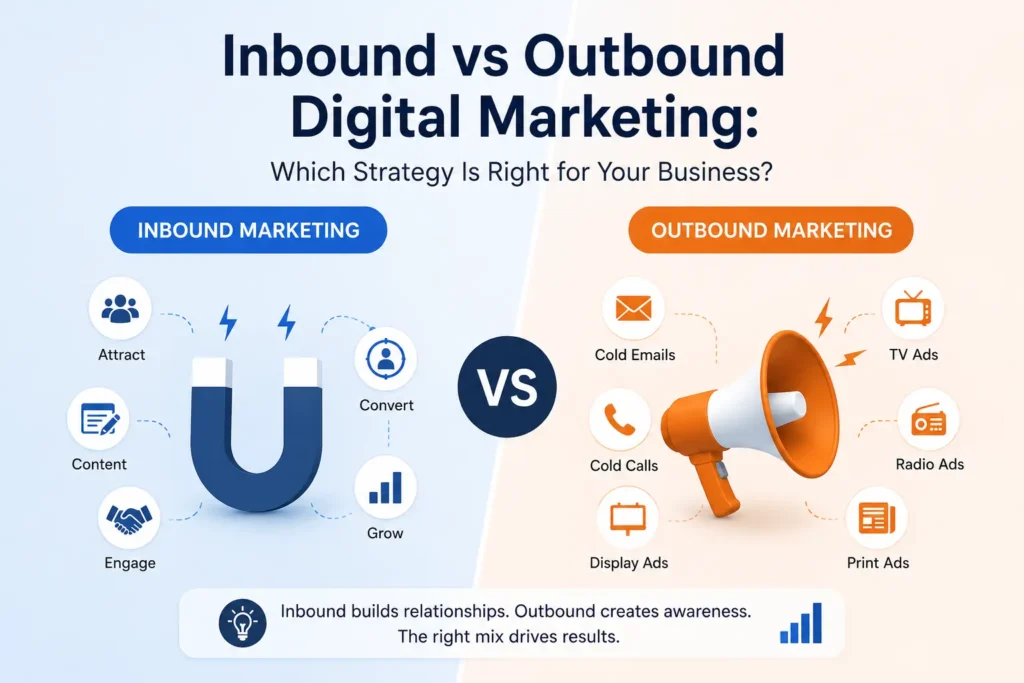
Inbound marketing attracts customers by creating content and experiences they actually want — blog posts, SEO-driven guides, free resources, podcasts, and helpful social content. The term was popularised by HubSpot, which built an entire global brand around the methodology.
Inbound marketing works on trust. Instead of interrupting people, it earns their attention.
What Is Outbound Marketing?
Outbound marketing is the more traditional approach — taking your message directly to your audience through paid ads, cold email, display campaigns, sponsorships, and influencer partnerships. It’s faster, more controllable, and generally easier to scale quickly.
Modern outbound marketing relies heavily on platforms like Google Ads and LinkedIn Ads, which offer precise audience targeting.
The Real Trade-Off: Time vs Speed
Inbound builds slowly but compounds. A great blog post you publish today may still be driving qualified leads three years from now. Outbound is fast but stops working the moment you stop paying. Most successful businesses use both — outbound to fuel short-term growth and inbound to build long-term equity.
This is why we structure most engagements at Syvera Digital around both: combining SEO and content for inbound with performance marketing for outbound.
When Inbound Wins
Inbound is ideal when your audience actively searches for solutions, your business has a longer sales cycle, you want to build a strong brand reputation, or you want acquisition costs to fall over time. SaaS, professional services, education, and B2B companies often see exceptional ROI from inbound.
When Outbound Wins
Outbound shines when you need leads quickly, you’re testing a new offer, your audience isn’t actively searching yet, or you have a strong creative team capable of producing scroll-stopping ads. E-commerce, real estate, hospitality, and time-sensitive promotions tend to respond very well to outbound.
How to Choose the Right Mix
For early-stage businesses, outbound usually starts the engine. For mature businesses, inbound becomes the long-term growth driver. Most strong digital strategies — including those we build for agencies, e-commerce brands, and SaaS companies — use both, with the balance shifting over time.
External research from Statista shows that businesses combining content marketing with paid acquisition consistently outperform those relying on a single channel.
Frequently Asked Questions
Is inbound cheaper than outbound?
Long-term, yes. Short-term, outbound usually delivers faster results.
Can a small business do both?
Absolutely. A focused blog plus a small ad budget is a powerful combination.
Where should I start?
Start with the channel closest to where your customers already are.
Final Thoughts
The best marketing strategy isn’t inbound or outbound — it’s the right blend for your stage, audience, and goals. If you’d like help mapping yours, contact us and we’ll build a plan that fits.