
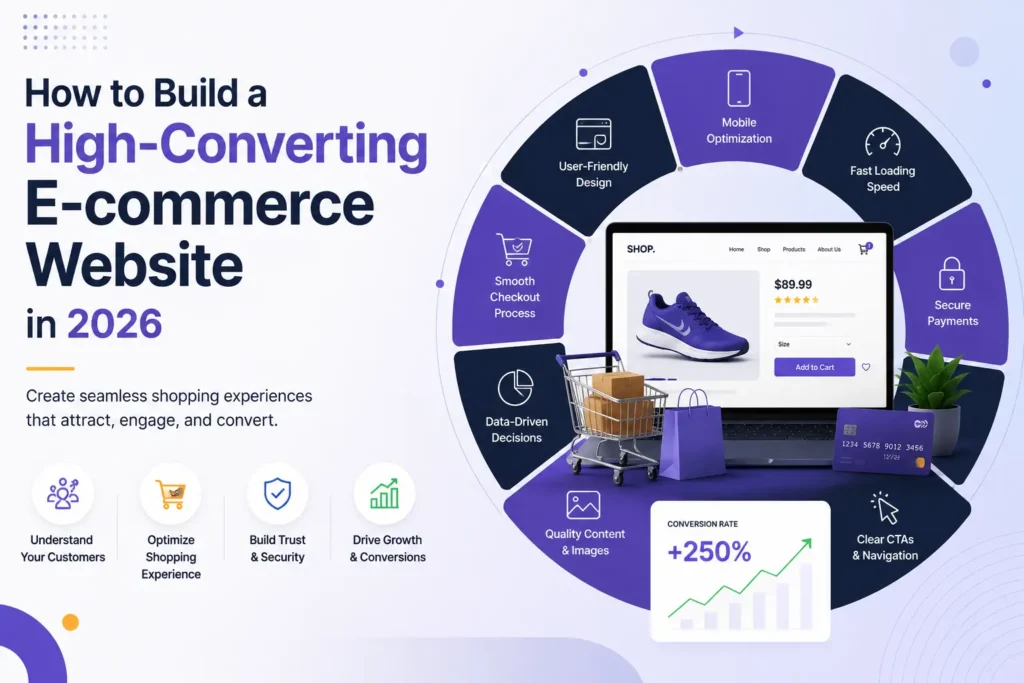
How to Build a High-Converting E-commerce Website in 2026
Launching an e-commerce store has never been easier. Launching one that actually converts? That’s a different challenge entirely. With shoppers becoming more discerning and competition increasing across every category, the difference between a store that grows and one that stalls almost always comes down to a handful of strategic choices.
In this guide, we’ll walk through exactly what it takes to build a modern, high-converting e-commerce website in 2026 — and the costly mistakes most store owners still make.
1. Choose the Right Platform for Your Stage
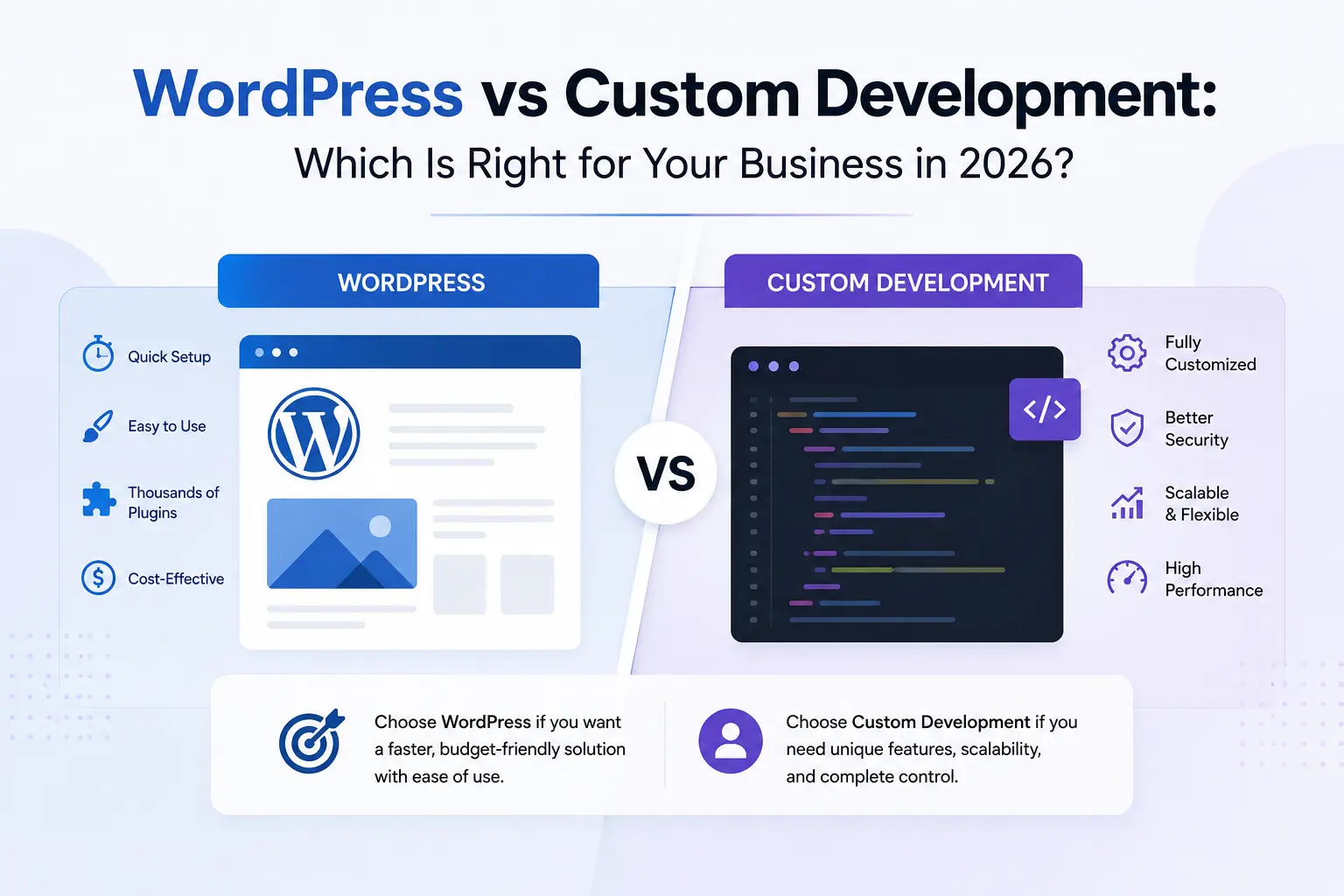
Your platform choice will shape everything that follows — speed, design flexibility, scalability, and integrations. Shopify remains the fastest path for most growing brands, while WooCommerce offers unmatched flexibility for WordPress-based businesses. Larger or highly customised stores often turn to BigCommerce or headless setups.
There’s no universally “best” platform — only the right one for your stage and goals. We help clients make this exact decision as part of our e-commerce development service.
2. Design for Trust First, Aesthetics Second
Beautiful stores don’t always sell. Trustworthy stores do. Clear navigation, professional photography, transparent shipping policies, visible reviews, and consistent branding signal credibility within seconds. Studies from Baymard Institute — the world’s leading e-commerce UX research firm — consistently show that trust-related friction is one of the largest reasons shoppers abandon carts.
3. Optimise Product Pages Like Landing Pages
Each product page is its own conversion engine. Strong product pages combine high-quality images, multiple angles, clear pricing, persuasive descriptions, FAQs, reviews, and a frictionless add-to-cart flow. This is where great UI/UX design directly influences revenue.
4. Eliminate Checkout Friction
Cart abandonment is the silent killer of e-commerce growth. Industry data consistently shows that the average online checkout drops a meaningful percentage of buyers due to friction. Multi-step forms, forced account creation, hidden costs, and limited payment options are the most common culprits.
Modern best-practice checkouts include guest checkout, multiple payment methods (cards, Apple Pay, Google Pay, PayPal, BNPL), saved addresses, and clear progress indicators.
5. Make Speed a Top Priority
A slow store loses sales — period. Google’s Core Web Vitals data consistently shows that pages loading in under 2.5 seconds significantly outperform slower ones. Image optimisation, modern hosting, and clean code are non-negotiable.
6. Build SEO Into the Foundation
E-commerce SEO is one of the most underused growth levers. Optimised product titles, structured category pages, schema markup, and content hubs can drive thousands of organic visits monthly — without ongoing ad spend. Our SEO optimisation service integrates directly with every store we build.
7. Plan for Retention, Not Just Acquisition
Acquisition gets you the first sale. Retention determines whether your business is actually profitable. Email automation, loyalty programmes, post-purchase upsells, and personalised recommendations dramatically lift lifetime value.
Frequently Asked Questions
Should I start on Shopify or WooCommerce?
Most early-stage brands move fastest with Shopify. WooCommerce is ideal if you’re already on WordPress.
How important is mobile optimisation?
Critical. The majority of e-commerce traffic worldwide is now mobile.
How much should I budget for a strong e-commerce build?
It varies widely — but trying to save on UX, speed, and SEO almost always costs more long-term.
Final Thoughts
A high-converting store isn’t built by accident. It’s the result of strategic decisions made at every stage — from platform to checkout. If you’re ready to build one, book a free consultation with our team and we’ll map the right path for your brand.